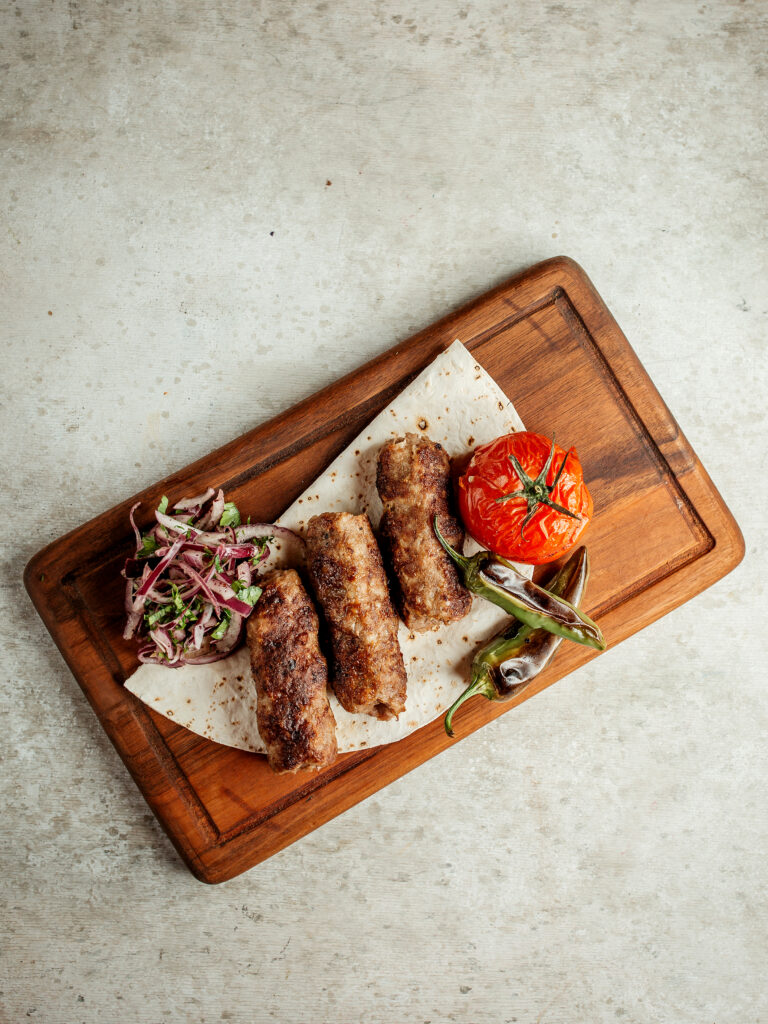
Ćevapi (also spelled cevapi/ćevapčići) are compact, finger-shaped minced-meat kebabs, lightly seasoned and grilled hot so they come off juicy inside with a gentle char outside. Within Balkan cuisine, they’re the most approachable gateway: simple ingredients, quick cooking, and a ritual of piling warm bread, raw onion, kajmak, and ajvar around a steaming platter. In the broader family of Balkan grilled meats (pljeskavica patties, kobasice sausages, ražnjići skewers), ćevapi stand out for restraint—fewer spices, more focus on meat quality and texture. Spelling mainly reflects size and local habits, not strict rules.
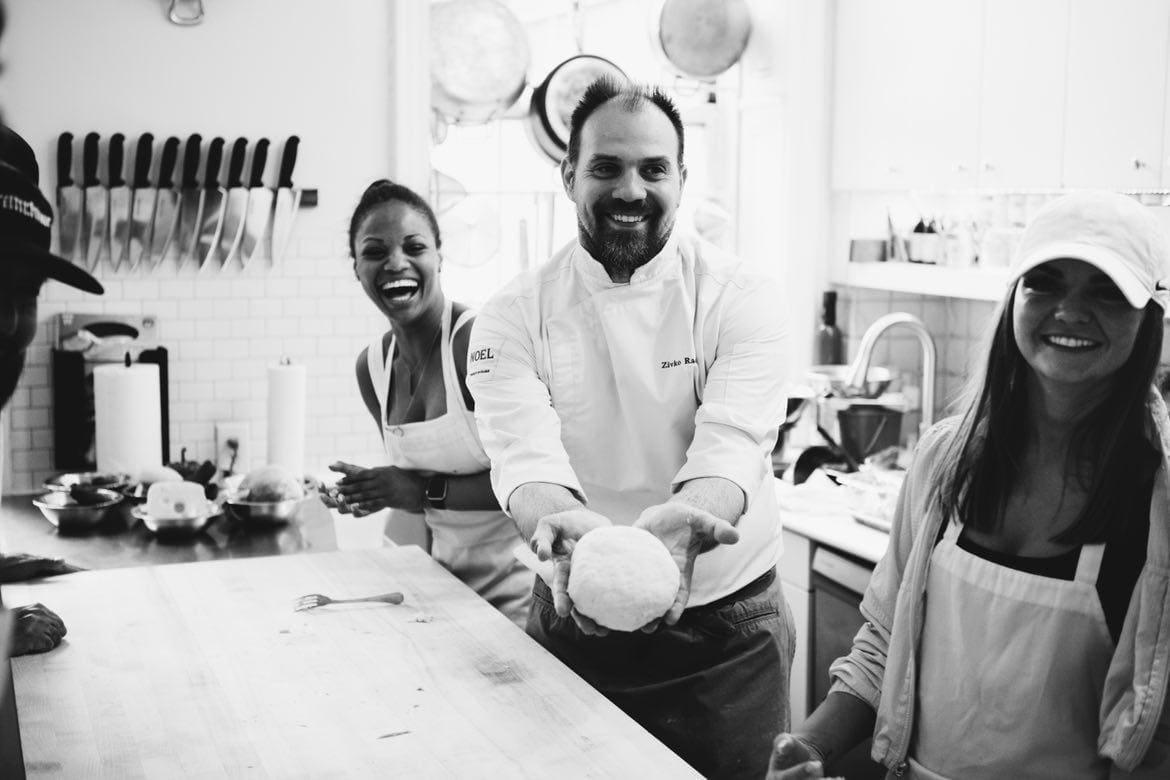
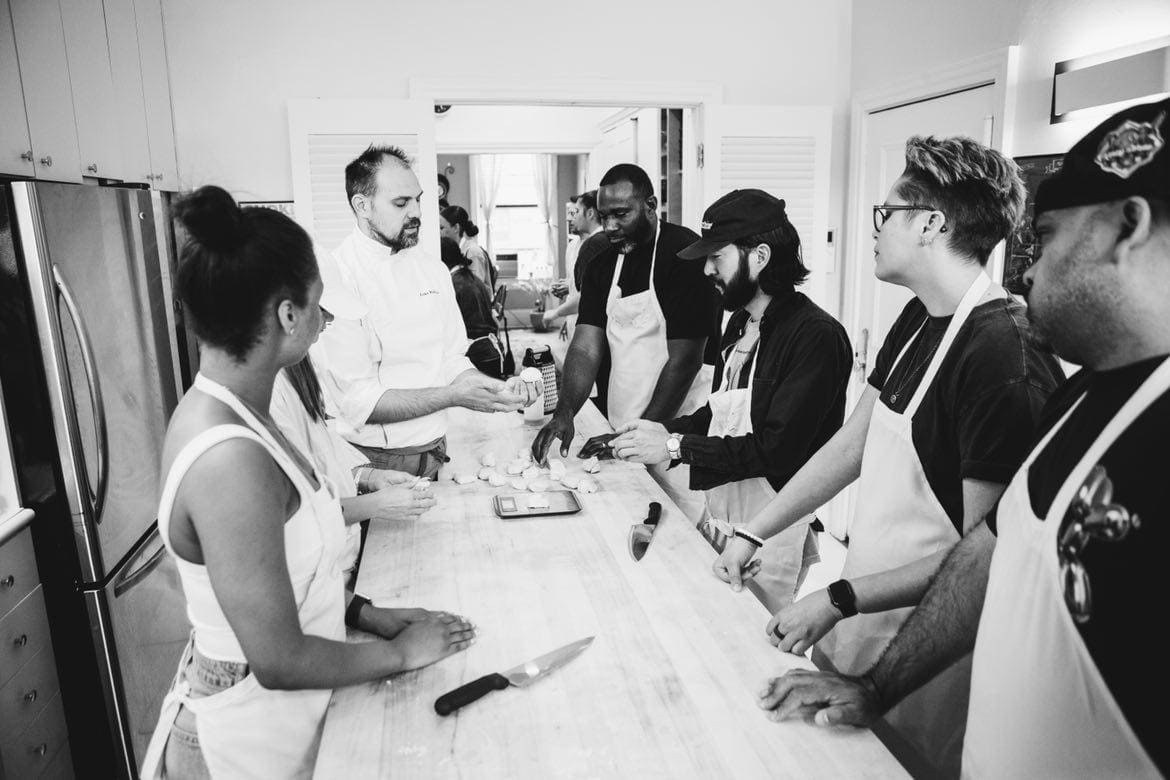
If you’re new to Balkan street food, start here: they work on charcoal, a cast-iron grill pan, or even the broiler, and they welcome every side you already love. Want hands-on coaching? Loza’s chef-led Cooking Classes in NYC cover grinding, seasoning, shaping, and heat control so your first batch tastes like you’ve been doing this for years.
What Are Cevapi? (The Balkan staple in a nutshell)
Ćevapi are finger-length kebabs made from freshly ground, lightly seasoned meat, grilled hard for a thin char and juicy center. The appeal is minimalism: quality beef (sometimes a touch of lamb), salt, and heat. Serve immediately so juices soak warm bread and onions pop with sweetness. To nail that “char-outside/juicy-inside” timing, Loza’s Cooking Classes teach exact heat cues.
Why spelling varies (ćevapi/cevapi/ćevapčići) and what the shapes mean
Region and language shape the name. “Ćevapi” (or anglicized “cevapi”) are finger-length pieces; “ćevapčići” are shorter, served in bigger counts. None of the spellings change the essentials—springy texture, light char, and clean beef flavor. Use whichever term your guests recognize; the taste is what matters.
The “family” of Balkan grilled meats (pljeskavica, kobasice) and how ćevapi stand out
Pljeskavica (patty), kobasice (sausages), and ražnjići (skewers) fill Balkan grills, but ćevapi shine for restraint and texture. They’re seasoned just enough to elevate the meat, not mask it—why condiments matter and why they pair perfectly with Loza’s Private Chef tastings.
Origins & Regional Styles
Ćevapi absorbed centuries of Ottoman influence and then diverged region by region. Bosnia & Herzegovina offers two famous styles: slim Sarajevo ćevapi tucked into puffy somun, and broader, connected Banja Luka pieces that pull apart into juicy strips. Serbia, Montenegro, and North Macedonia lean beef-forward with variations in fat ratio, grind size, and paprika warmth; portions are heartier and sides more assertive (kajmak, urnebes). Cross a border and bread changes—from lepinja to somun to pita—yet the soul stays the same: a springy, savory bite built on fresh meat and hot fire. In the U.S., diaspora cooks adapt to available cuts and apartment equipment without losing identity. Want to compare styles side by side? Book a Balkan Cooking Class or have Loza’s Private Chef design a three-style tasting at home.
Bosnia & Herzegovina (Sarajevo/Banja Luka styles: size, shape, serving bread)
Sarajevo ćevapi are slim and usually tucked into puffy somun; Banja Luka pieces are wider and connected in strips you tear apart. Both rely on ripping-hot grills and quick service to keep juices in. The bread matters as much as the meat—warm, steamy, and ready to soak. Build a regional flight with Loza’s Private Events team.
Serbia, Montenegro, North Macedonia (mixes, portion sizes, local sides)
These styles skew beef-forward with a touch of lamb in some regions, larger portions, and bolder sides like kajmak or urnebes. You’ll see medium-fine grinds for a springy bite, plus paprika warmth in certain local mixes. Salads and grilled veg balance the plate.
Diaspora influence: how recipes adapt in the U.S. without losing identity
American kitchens swap somun for charred pita, cast-iron for live coals, and retail grinds for butcher blends. Identity survives because rules are simple: good meat, gentle seasoning, high heat, fast service. Loza’s Cooking Classes translate those rules to your stove so results are repeatable.
Ingredients & Flavor Profile
Great ćevapi begin with a fresh, medium-fine grind. Many cooks go 100% beef (chuck/brisket blend); others add 10–20% lamb for aroma and extra juiciness. Seasoning is gentle—salt, a little black pepper, maybe a touch of garlic or sweet paprika—so proteins bind and the meat’s character leads. Rest the mixture cold, shape with damp hands, and keep pieces even so they cook uniformly. Done right, the texture is lightly elastic and never crumbly; juices mingle with bread and sharp onion for that sweet-savory-smoky bite. Because flavor is restrained, condiments do the color work: silky kajmak for richness, roasted-pepper ajvar for depth, and bright pickled relishes for lift. Hosting and want help sourcing or pairing? Loza’s Private Events team can curate a Balkan board that turns a tray of ćevapi into a feast.
Beef vs. beef-lamb mixes (fat ratio, grind size, salt timing)
All-beef is classic and clean; a 10–20% lamb addition adds perfume and moisture. Ask for a medium-fine grind and mix salt evenly so proteins bind without going pasty. Chill before shaping—cold proteins hold form and sear better.
Gentle seasonings (garlic, paprika, baking soda/mineral water debates)
Seasonings are subtle: salt, pepper, a hint of garlic, maybe sweet paprika. Some add a pinch of baking soda or sparkling water for lift; use lightly to avoid “bouncy” texture. Goal: springy-juicy, not spongy.
Texture goals: springy, juicy, and lightly charred—never crumbly or dry
Perfect ćevapi snap softly when bitten, glisten inside, and carry a thin char outside. Crumbly = too lean or over-mixed; dryness = overcooked. Rest briefly in warm bread so juices redistribute.
How They’re Served (and Why It Matters)
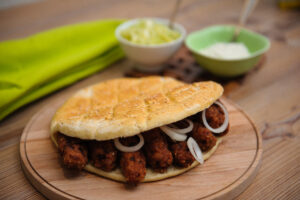
Service is half the experience. Warm lepinja or somun captures steam and juices, so slide ćevapi inside and press lightly to let flavors marry. Classic companions—raw onion, kajmak, ajvar, sometimes urnebes—let guests tune fat, smoke, heat, and acidity to taste. Street-food style means eating on the move; platter style invites sharing and that long, happy linger Balkan meals are known for. Expect 5–10 pieces per serving, plus a salad (shopska, cabbage) and grilled peppers or zucchini. For a turnkey setup, Loza can bring passed mini-ćevapi, warm bread, and a condiment bar via Private Events.
Breads: lepinja/somun/pita—soaking juices and keeping steam in
Bread is your flavor engine. Warm lepinja or somun traps steam and juices, turning every bite into meat-infused bread. If you can’t source Balkan loaves, a well-charred pita or soft roll works—just warm it right before serving.
Classic sides: raw onion, kajmak, ajvar, urnebes, fermented relishes
Raw onion brings snap; kajmak adds silk; ajvar delivers roasted-pepper depth; urnebes brings creamy heat; pickles cut richness. Set them out buffet-style so everyone dials fat, smoke, heat, and acidity. Loza can curate the full bar for Private Events.
Street-food ritual vs. sit-down platter: portions, pacing, and sharing
Street service is fast and handheld; platters invite lingering and sharing. Plan 5–10 pieces per person with salad and veg. Keep bread warm in a towel and pass condiments often—conversation is part of the meal.
Cooking Ćevapi at Home: Methods & Pro Tips
Think in three pillars: shaping, heat, rest. Shape cold mixture into even fingers (about a finger thick), then chill again so they hold form. On charcoal, create a hot zone for color and a medium zone to finish; indoors, preheat a cast-iron grill pan hard or use the broiler. Lightly oil the surface—not the meat—turn once, and cook 6–8 minutes total depending on size. Let them rest a minute inside warm bread so juices redistribute. Batch prep is easy: freeze shaped ćevapi on a tray, then bag; cook from semi-frozen over slightly lower heat to protect texture. Prefer guided practice? Loza will tailor a Cooking Class to your stove—or you can relax while a Private Chef grills, plates, and pairs sauces.
Shaping & resting (why cold mixtures bind better)
Shape with damp hands into even fingers; chill again so they firm up. Cold surfaces sear cleaner, hold lines better, and lose less juice. A brief second chill is the easiest upgrade most home cooks skip.
Grill, grill-pan, or broiler (heat zones, oiling, turning, timing)
Create a hot zone for color and a medium zone to finish. Indoors, preheat cast-iron hard or set the broiler close. Lightly oil the cooking surface, turn once, and aim for 6–8 minutes total.
Make-ahead & freezing: batch prep without losing texture
Freeze shaped ćevapi on a tray, then bag; cook from semi-frozen over slightly lower heat to protect juiciness. Warm bread and condiments while they finish so everything lands hot together. For parties, Loza’s Private Chef removes the stress.
Nutrition & Sourcing
Start with quality meat—fresh grind, clean aroma, balanced fat—for better browning and less need for heavy seasoning. If ethics matter, ask for pasture-raised or reputable suppliers; good meat tastes cleaner and stays juicier. Build a balanced plate with crisp salads (tomato-cucumber-feta), grilled veg, and a spoon of beans or lentils for fiber. Dairy-free? Skip kajmak and lean on ajvar and pickles. Gluten-free? Use GF flatbreads or lettuce wraps. Little touches make a big difference: steam or warm bread so it stays supple, finish the platter with a thread of olive oil, and salt onions lightly to tame their bite. Hosting larger groups and want a health-forward spin? Loza can design a lighter Balkan menu—more vegetables, leaner blends, vibrant salads—through Private Events so everyone feels looked after.
Choosing quality meat (marbling, fresh grind, ethical sourcing)
Ask for fresh, clean-smelling beef with visible marbling; a chuck/brisket blend is ideal. Ethical sourcing often means careful handling and better fat quality—inputs that pay off on the grill.
Balancing the plate (salads, grilled veg, beans)
Add crisp salads, grilled peppers or zucchini, and a spoon of beans or lentils. Balance keeps the meal satisfying without heaviness. A final drizzle of olive oil ties meat, bread, and veg together.
Gluten/dairy notes and easy swaps (for buns/sides)
Dairy-free? Skip kajmak and lean on ajvar and pickles. Gluten-free? Use GF flatbreads or lettuce wraps. The format is modular by design, so everyone at the table can eat joyfully.
Ćevapi in NYC: Experience the Balkans with Loza
You don’t need a backyard grill or a plane ticket to eat like the Balkans—do it in New York with Loza. Join a Cooking Class to master grinding, seasoning, and timing on your exact equipment, with chef feedback that shortens the learning curve. Prefer to be a guest at your own party? Book a Private Chef experience and let Loza handle shopping, cooking, plating, and cleanup while you enjoy mini-ćevapi with warm bread, ajvar, and seasonal salads. Planning a milestone or team offsite? Private Events can be fully Balkan-themed—passed bites, grill-pan action, and custom menus that move from tapas-style to family-style. However you choose to taste, the goal is simple: real flavor, zero stress, and that easy, convivial vibe that makes people linger.
Join a Balkan or grilling-focused Cooking Class (Loza)
Learn grind selection, seasoning ratios, shaping, and heat control in a chef-led, hands-on session tailored to your stove and dietary needs. Start here if you want confident results fast: Cooking Classes.
Book a Private Chef tasting (mini-ćevapi, modern sides & sauces)
Host an intimate dinner where the grill comes to you—mini-ćevapi, warm bread, house ajvar, and seasonal salads plated as a guided tasting. Shopping, cooking, and cleanup handled: Private Chef.
Host a Balkan-themed Private Event (passed bites, condiment bar)
From team offsites to milestones, Loza builds interactive stations—passed mini-ćevapi, ajvar & kajmak bar, grilled veg—scaled to your space and budget. Bring the Balkans to your venue: Private Events.
FAQ: Your Ćevapi Questions, Answered
What meat blend works best—and can I go 100% beef?
Many regional styles are all-beef; others add 10–20% lamb for aroma and moisture. Medium-fine grind and balanced fat are more important than the exact ratio. Chill thoroughly before shaping for a springy texture.
Somun vs. lepinja—are they interchangeable at home?
Both are airy Balkan flatbreads. If you can’t find them, a warmed, lightly charred pita or soft roll is a great stand-in—keep it hot so steam marries flavors.
Can I bake ćevapi? (When a broiler or cast-iron is the better plan)
You can bake in a pinch, but you’ll miss the seared crust that defines Balkan grilled meats. A ripping-hot cast-iron or broiler delivers color and flavor quickly. Oil the pan, turn once, and rest the ćevapi inside warm bread before serving.
Want help dialing it in?
Book Loza’s Cooking Classes for technique, a Private Chef for a done-for-you dinner, or a Private Event to bring a full Balkan spread to your space