Did you know that the methods of cooking you choose can impact up to 40% of the nutrients in your food?
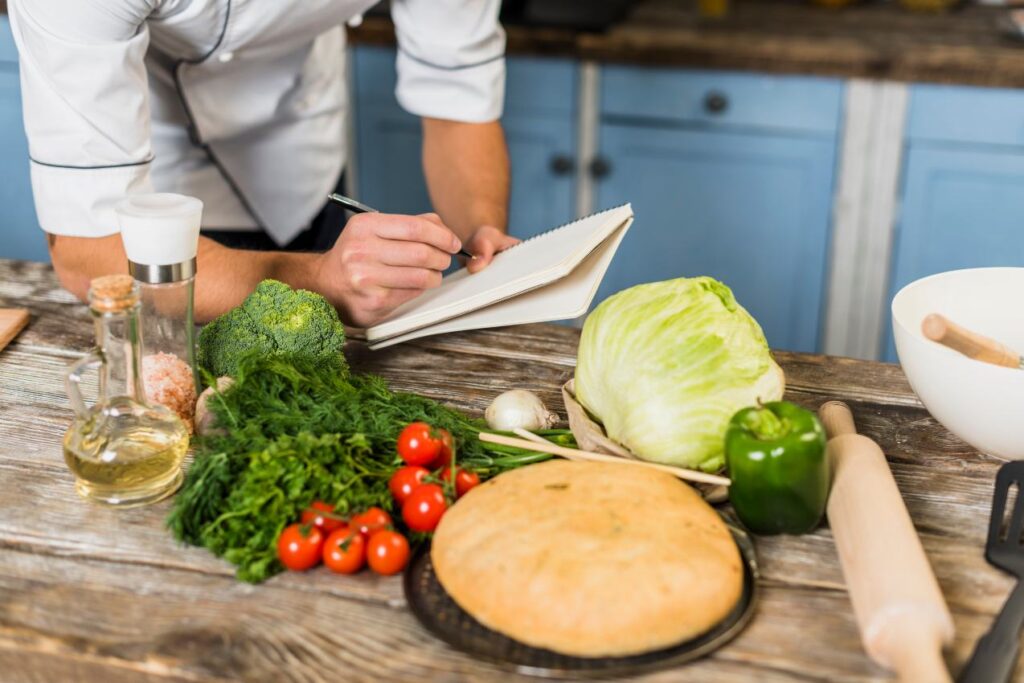
Most home cooks focus solely on ingredients while overlooking how preparation techniques fundamentally alter the nutritional value of meals. However, mastering healthy cooking methods is equally important as selecting quality ingredients.
The journey to healthy cuisine doesn’t require expensive equipment or chef-level skills. In fact, simple adjustments to your cooking techniques can transform ordinary ingredients into nutritious, flavorful dishes. Whether you’re looking to reduce added fats, preserve vital nutrients, or simply expand your culinary repertoire, understanding the right cooking methods makes all the difference.
This chef-approved guide breaks down essential healthy techniques that anyone can master, regardless of experience level. From oven-based methods that require minimal oil to quick stovetop techniques that preserve vitamins, you’ll discover practical approaches that make healthy cooking both accessible and enjoyable.
Ready to revolutionize your kitchen skills while boosting the nutritional value of every meal? Let’s explore the cooking methods that professional chefs use to create healthy, delicious food without sacrificing flavor.
Ingredients as the Foundation of Healthy Cuisine
Healthy cooking techniques can only reach their full potential when paired with thoughtfully selected ingredients. Even the most nutrient-preserving methods – such as steaming or gentle sautéing—cannot compensate for low-quality or overly processed foods. In professional kitchens, ingredient sourcing is treated as the starting point of every healthy dish, not an afterthought.
Fresh, seasonal produce provides higher nutrient density, better texture, and cleaner flavor profiles that require less salt, fat, and sugar during preparation. The same principle applies to proteins: responsibly sourced seafood, pasture-raised poultry, and quality cuts of meat respond far better to gentle cooking techniques like roasting, poaching, or slow cooking. Whole grains, legumes, herbs, and cold-pressed oils further support balanced nutrition while allowing chefs to rely on natural flavors instead of heavy seasoning.
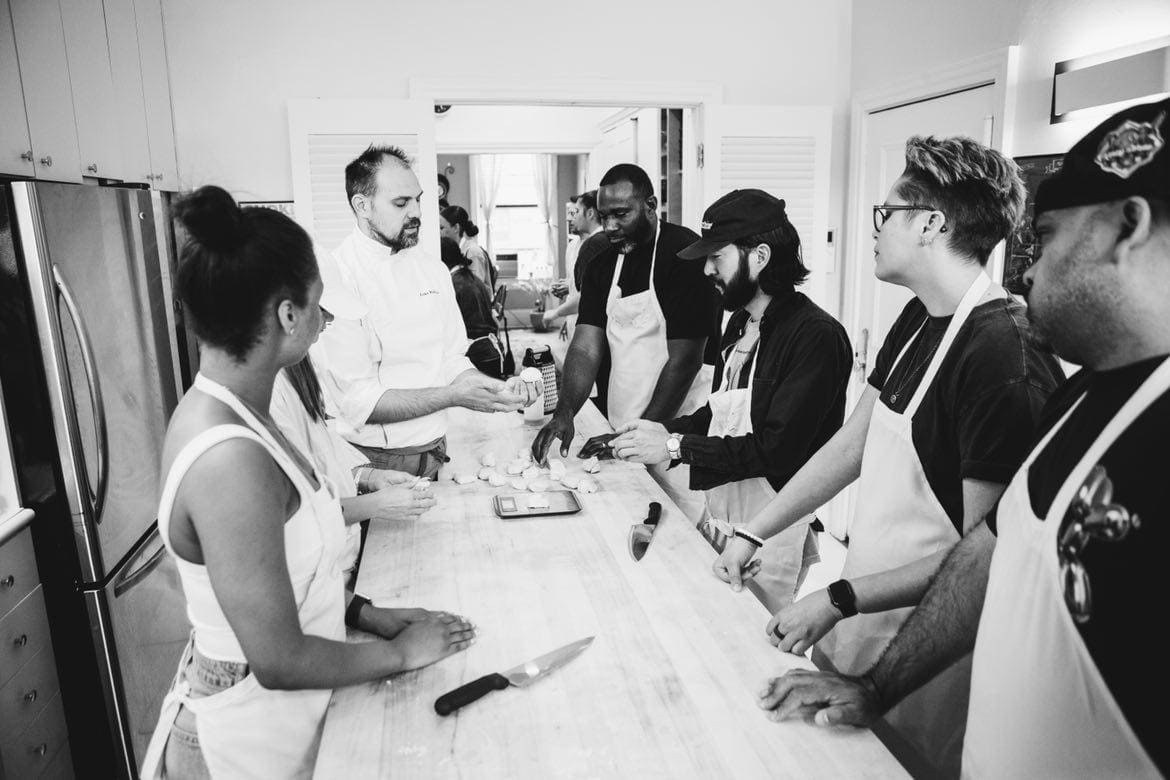
This ingredient-first philosophy is central to how private chefs approach healthy cuisine in real-world settings. In Loza NYC, menus are built around ingredient quality first—then refined through techniques that preserve nutritional value and elevate taste. Whether through customized private chef services, curated cooking classes, or intimate private dining experiences, the focus remains the same: ingredients dictate the method, not the other way around.
When ingredients are chosen with intention, healthy cooking becomes simpler. Vegetables retain their vibrancy with minimal heat, proteins stay tender without excess fat, and herbs and spices provide complexity without relying on sodium or sugar. This alignment between ingredients and technique is what transforms healthy food from a concept into a sustainable, enjoyable way of eating – both at home and at the professional level.
Why Cooking Methods Matter for Health
The transformation of nutrients during cooking is far more complex than many realize. Every time heat touches your food, a cascade of chemical reactions begins that can either enhance or diminish nutritional value, depending on your approach.
How cooking affects nutrients
Not all vitamins respond the same way to heat and water. Water-soluble vitamins – particularly vitamin C and B vitamins – are highly susceptible to breakdown during cooking, with boiling destroying nearly all vitamin C in some vegetables, leaving retention rates as low as 0% in boiled chard. Conversely, fat-soluble vitamins like vitamins A, D, E, and K tend to be more heat-stable, though still affected by high-temperature methods.
Cooking duration and temperature significantly impact nutrient preservation. Studies show that B vitamins in roasted meat may decline by as much as 40% due to long cooking times at high temperatures. Meanwhile, some antioxidants actually become more bioavailable after cooking – lycopene in tomatoes and beta-carotene in carrots become easier for your body to absorb after heat exposure.
Different methods of cooking yield dramatically different nutrient retention rates:
- Steaming: Preserves most water-soluble vitamins with retention rates above 90% for many vegetables
- Microwaving: Maintains high vitamin C retention (>90%) in spinach, carrots, and broccoli
- Boiling: Causes severe losses of water-soluble nutrients, with up to 71% of vitamin C lost
Notably, cooking doesn’t always decrease nutrient content. For instance, cooking increases vitamin E availability in leafy greens by breaking down cell walls and making nutrients more accessible. Additionally, cooking certain foods makes phytochemicals more available – the phytochemicals in cooked tomatoes are more bioavailable than in raw ones.
The role of fat, salt, and sugar in preparation
Humans have maintained a complex relationship with salt, sugar, and fat since our species’ origin. These ingredients are essential – salt for fluid balance, sugar for energy, and fats for brain development. Nevertheless, their ability to transform bland ingredients into flavorful food has led to excessive use in modern cuisine. Contant us and reserve your dinner to your friends with atmosphere only for you.
By the mid-1900s, the processed food industry discovered that salt, sugar, and fat could be formulated to hit what market researcher Howard Moskowitz termed the “bliss point”—the perfect balance of saltiness, sweetness, and richness. This discovery fueled the development of highly palatable processed foods that now dominate the American diet, with approximately 60,000 processed food products in supermarkets.

The health implications are substantial. Americans consume an average of 22 teaspoons of added sugar daily – far exceeding the American Heart Association’s recommended limit of 5-9 teaspoons. Furthermore, Americans typically consume over 3,400 milligrams of sodium daily, with 70% coming from processed foods – well above the recommended maximum of 2,300 mg.
Common unhealthy methods to avoid
Not all cooking approaches are created equal when it comes to health impact. Several common cooking methods can significantly reduce nutritional value or introduce harmful compounds:
Deep-frying dramatically increases caloric content and fat levels while potentially creating trans fats. When oils are heated repeatedly or past their smoke point, they break down and form harmful compounds. Moreover, frying can reduce vitamin C activity in vegetables by 33-95%.
Grilling, while flavorful, creates potentially harmful compounds called heterocyclic amines (HCAs) and polycyclic aromatic hydrocarbons (PAHs) when meat is cooked over high flames. These compounds have been linked to serious illnesses, though research shows PAHs can be decreased by 41-89% if drippings are removed and smoke is minimized.
Overcooking vegetables decreases their vitamin and mineral content significantly. Once vegetables lose their vibrant color, they’re likely overcooked and have lost substantial nutritional value. Similarly, high-temperature cooking of meat can damage delicate omega-3 fatty acids found in fish.
The ideal approach balances cooking methods – utilizing steaming, quick sautéing, and careful roasting – while being mindful of added fats, sugars, and salt to create meals that are both nutritious and delicious. If you want to master these healthier techniques with real chef guidance, explore Loza’s cooking classes for practical, hands-on methods you can apply at home.
Oven-Based Healthy Cooking Techniques
Unlike stovetop methods, oven cooking techniques offer exceptional versatility while requiring minimal added fats. Oven-based cooking stands out as one of the healthiest approaches, as it preserves nutrients and allows fats to drip away during the cooking process.
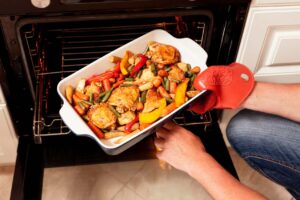
Baking: slow and even cooking
Baking involves surrounding food with moderate dry heat, typically at temperatures up to 375°F. This gentle cooking method works exceptionally well for foods without a stable structure that solidify during cooking, including breads, cakes, and muffins. Although baking is often associated with desserts, it’s also perfect for seafood, poultry, lean meats, vegetables, and fruits.
One significant advantage of baking is that additional fat typically isn’t needed. The oven’s even heat distribution cooks food from all directions, allowing natural moisture within the food to transform into steam, which aids in cooking and texture development. This method retains nutrients remarkably well, making it ideal for health-conscious cooks.
For best results, always preheat your oven to the appropriate temperature – 350°F is commonly used for most baking needs. When baking vegetables, you can achieve crispy results without oil by using parchment paper or silicone baking mats. For extra flavor without added fat, try seasoning foods with herbs and spices before baking.
Roasting: crisp texture with less oil
Roasting takes baking to the next level by using higher temperatures – generally above 400°F. This method cooks food uncovered, creating a flavorful golden-brown exterior while maintaining moisture inside. Unlike frying, roasting allows fat to drip away from the food during cooking, especially when using a rack inside a roasting pan.
This technique works wonderfully for vegetables, bringing out their natural sweetness through caramelization. Roasted vegetables like cauliflower develop savory, tender, and slightly sweet flavors when chopped into even pieces and lightly brushed with minimal oil. Roasting also excels for seafood, poultry, and meat. To experience these techniques at their best, call and reserve your private dinner with Živko and enjoy a chef-prepared meal built around carefully roasted, ingredient-driven dishes.

For optimal results, use a heavy roasting pan and adjust temperatures accordingly—vegetables typically roast best at 400°F, large roasts at 250-375°F, and smaller cuts at 350-375°F. Always check doneness using a meat thermometer and let meat rest for 10-20 minutes before slicing.
Broiling: high heat, low fat
Broiling uses intense direct heat from above to quickly cook food at temperatures between 500-550°F. This method functions essentially like an upside-down indoor grill, making it perfect for times when outdoor grilling isn’t possible. Foods must be placed close to the broiler element—generally in the top rack position—for the heat to effectively reach and cook them.
The high temperatures create a flavorful crust on the outside while keeping the inside juicy. Broiling works best for:
- Thin cuts of meat less than 1.5 inches thick
- Fish filets and seafood
- Tender fruits like peaches and pineapple
- Certain vegetables including pepper strips and tomato halves
To broil successfully, preheat for at least five minutes and use a broiling pan or wire rack over a lipped sheet pan so fat can drip away. Position thinner cuts closer to the heat source (3-4 inches) and thicker cuts slightly farther away (4-5 inches). Importantly, always keep a watchful eye on foods while broiling as they can quickly go from perfectly browned to burnt.
All three methods minimize the need for added fats while preserving nutrients and flavors, making them cornerstone techniques in any healthy cooking repertoire.
Stovetop and Pan Cooking Methods
Stovetop cooking unlocks a world of quick, versatile methods that maximize flavor while preserving nutrients. These techniques form the backbone of healthy everyday cooking in kitchens worldwide, offering control and flexibility that other cooking approaches simply cannot match. If you’d like to experience these refined, technique-driven dishes prepared at the highest level, contact Loza NYC and reserve your private dinner with Živko.
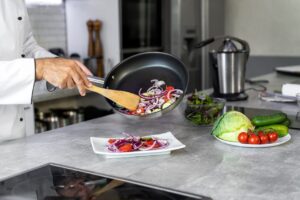
Sautéing and stir-frying with minimal oil
Traditional sautéing typically involves cooking food quickly in fat over medium-high heat. Yet contrary to popular belief, you don’t need excessive oil to achieve delicious results. The secret to healthy sautéing lies in technique rather than added fats.
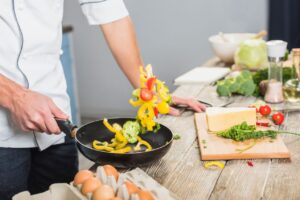
For oil-free sautéing, start with a preheated, heavy-bottomed pan over medium-high heat. Once hot, add vegetables with high water content like onions, mushrooms, or carrots. Surprisingly, these vegetables release their natural moisture, preventing sticking and creating caramelization that intensifies flavor. This “dry sauté” method browns onions beautifully without a drop of oil.
When moisture is needed, add just 1-2 tablespoons of water, broth, or wine—only enough to prevent sticking without steaming the food. A flat-edged spatula works better than a spoon for keeping ingredients from adhering to the pan. Remember not to overcrowd the pan; otherwise, vegetables will steam instead of sauté.
Poaching: gentle cooking in liquid
Poaching involves gently cooking food submerged in liquid at low temperatures between 160-180°F (71-82°C). This gentle approach preserves the structure of delicate proteins while minimizing added fats.
This technique excels with delicate foods that might fall apart using other cooking methods – eggs, fish, chicken, and even fruits. Consequently, poaching allows proteins to denature without losing moisture, keeping food succulent and tender. The American Heart Association recommends this method because it requires no added fat, making it ideal for health-conscious cooking.
The poaching liquid itself offers numerous possibilities: water with vinegar for eggs, white wine for fish, stock for chicken, or red wine for fruits. Furthermore, adding aromatic ingredients like herbs, spices, garlic, or shallots to the poaching liquid infuses foods with subtle flavors.
Steaming: preserve nutrients and flavor
Steaming stands out as one of the most nutritionally superior cooking methods available. Food cooks through contact with steam rather than immersion in water, thereby maintaining far more nutrients than boiling or other high-moisture techniques.
The evidence supporting steaming’s benefits is substantial. Research shows steaming broccoli preserves myrosinase, an enzyme necessary for forming cancer-fighting sulforaphane. Whereas boiling and microwaving broccoli for just one minute destroyed this enzyme, steaming preserved it for up to five minutes. Another study found steaming actually increased total glucosinolates (cancer-fighting compounds) by 30% compared to raw broccoli.
For effective steaming, use a steamer basket or bamboo steamer that keeps food elevated above – never touching – the boiling water. Cut foods into uniform pieces for even cooking, and remember that proper steaming should leave vegetables vibrant in color and tender-crisp, never mushy.
Modern and Time-Saving Methods
Modern technology has transformed healthy cooking, offering time-saving methods that preserve nutrients without sacrificing taste. These contemporary techniques make nutritious meal preparation accessible even on the busiest days.

Microwaving: fast and efficient
Microwaves cook food using energy waves that selectively target water molecules, causing them to vibrate and generate heat quickly. This selective heating method offers remarkable nutrient preservation benefits. Research shows microwaving often retains more vitamin C and other heat-sensitive nutrients than conventional cooking methods. This occurs because microwave cooking times are shorter and typically require less water.
Studies demonstrate that microwaved vegetables can maintain higher levels of minerals including calcium, magnesium, and potassium. Microwaving may even increase the antioxidant activity of certain foods. For optimal results, use minimal water when microwaving vegetables and keep cooking times brief.
Pressure cooking: retain flavor and nutrients
Pressure cookers create a sealed environment that raises the boiling point of water, subsequently cooking food faster at higher temperatures. This method preserves approximately 90-95% of food nutrients, outperforming most other cooking approaches. The shorter cooking time coupled with controlled temperature helps maintain vitamins and minerals that would otherwise be lost through longer cooking processes.
Pressure cooking can enhance nutritional benefits in unexpected ways. For instance, pressure cooking starchy foods and then cooling them increases resistant starch formation, which supports gut health. This technique works exceptionally well for beans, tough cuts of meat, and grain dishes.
Slow cooking: hands-off healthy meals
Slow cookers offer convenience without compromising nutritional value. This method gently cooks food over several hours at low temperatures, developing rich flavors while preserving nutrients. The enclosed cooking environment maintains moisture, creating tender results without added fats.

Slow cooking excels with tougher cuts of meat, transforming them into fork-tender meals. This approach requires minimal preparation – typically just combining ingredients in the pot before letting the appliance work independently. Certainly worth noting is slow cooking’s ability to build flavor without constant attention, making healthy home cooking feasible even during hectic schedules.
No-Cook and Raw Meal Ideas
Sometimes the healthiest option is to skip cooking entirely. Raw food preparation preserves heat-sensitive nutrients and natural enzymes that otherwise break down during thermal processing. This same ingredient-first approach—built around freshness, balance, and thoughtful simplicity – is at the core of Živko’s philosophy as a chef.
When to skip cooking altogether
Consider going raw for maximum nutritional benefit when ingredients are fresh and high-quality. Raw meals shine on hot summer days when turning on the stove feels unbearable. Primarily, raw food diets exclude cooking above 104-118°F to maintain food enzymes and nutrients. Indeed, some studies show raw vegetables retain higher levels of vitamin C and B vitamins than their cooked counterparts.
Healthy no-cook meal combinations
Creating satisfying no-cook meals requires thinking in components rather than recipes:
- Bowl-based meals: Combine pre-cooked grains with raw vegetables, pre-cooked protein, and nuts or seeds
- Mason jar salads: Layer dressing at bottom, followed by hardy vegetables, protein, and greens on top
- Wraps and rolls: Use large lettuce leaves as wraps filled with protein salads or vegetables
- Overnight oats: Mix rolled oats with milk or yogurt, refrigerate, and add fresh fruit toppings
Best ingredients for raw dishes
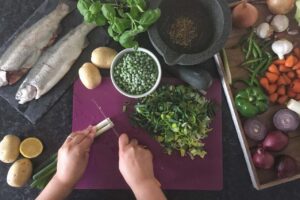
Stock your pantry with raw-friendly staples including fresh fruits, vegetables, nuts, seeds, sprouted grains, and dried fruits. Specifically, ingredients like cashews add creaminess when blended, dates provide natural sweetness, and chia seeds offer thickening power . For protein, incorporate pre-cooked rotisserie chicken, hard-boiled eggs, canned beans or tinned fish to create balanced no-cook meals.
Conclusion
Mastering healthy cooking methods transforms your kitchen into a place where nutrition and flavor coexist perfectly. Throughout this guide, we’ve explored how cooking techniques significantly impact the nutritional value of your meals – sometimes preserving up to 90% more nutrients compared to less optimal methods.
The choice between steaming, roasting, sautéing with minimal oil, or using modern appliances like pressure cookers ultimately depends on your specific ingredients and desired outcomes. Each method offers unique benefits, whether preserving water-soluble vitamins through gentle steaming or enhancing antioxidant availability through careful roasting.
Remember that healthy cooking doesn’t require sacrificing taste for nutrition. Rather, these chef-approved techniques enhance natural flavors while maintaining nutritional integrity. Many methods actually intensify flavors – caramelizing vegetables through roasting or developing rich tastes in slow-cooked dishes without added fats.
Additionally, becoming mindful about cooking temperatures, duration, and added ingredients puts you in control of both taste and health benefits. Even simple adjustments like using broiling instead of frying or choosing raw preparations for certain foods can dramatically improve your meals’ nutritional profile.
Start by incorporating one new healthy cooking method into your routine each week. Before long, you’ll find yourself naturally reaching for the steamer basket instead of the deep fryer or enjoying no-cook meals that preserve every bit of natural goodness. After all, healthy cooking isn’t just about what ingredients you use – it’s about how you transform them into delicious, nourishing meals.