Traditional Serbian dishes remain one of Europe’s best-kept culinary secrets, waiting to be discovered by food lovers worldwide. The rich food culture of the Balkans is a complex tapestry woven from centuries of history, regional influences, and a deep-seated passion for hospitality. When you sit at a table in this region, you aren’t just eating; you are participating in a social ritual that has defined the Balkan identity for generations. Serbian cuisine is a hearty, soulful experience that combines the bold flavors of the Ottoman Empire with the refined techniques of Central European and Mediterranean cooking. This unique blend creates a diverse menu that ranges from slow-roasted meat to delicate, flaky pastries.

Whether you’re planning a trip to Belgrade or simply want to expand your culinary horizons from home, this guide showcases 15 authentic Serbian dishes you absolutely must try in 2026.
#1 Gibanica

A beloved treasure of local households, Gibanica stands as the undisputed cornerstone of traditional Balkan cuisine. This isn’t just a simple cheese pie; it is a versatile food that appears at every significant life event, from weddings to simple family breakfasts. Gibanica is characterized by its unique preparation method where thin layers of phyllo dough are soaked in a rich mixture of eggs, fresh cheese, and sparkling water. This technique creates a distinctive texture that is simultaneously crispy on the outside and incredibly soft, almost custardy, on the inside.
Gibanica Ingredients & Facts:
- Thin phyllo dough: High-quality sheets are essential for the perfect crunch.
- Egg & Cheese mixture: Typically uses fresh white cheese or feta-style cheese.
- Sparkling water: The secret ingredient that makes the pie light and “puffed up.”
- Cultural Significance: Often served as a welcome dish for guests or at festive family gatherings.
- Best Time to Eat: Delicious both hot and cold, often paired with thick yogurt.
#2 Burek

Originally introduced during the Ottoman era, Burek has evolved to become one of the most cherished and iconic Serbian dishes. This flaky pastry is a staple of the local street food scene, particularly in the early morning hours when workers and party-goers alike gather at bakeries for a fresh slice. In Belgrade, Burek is traditionally baked in large round pans and sold by weight, usually cut into quarters. The dough is stretched until it is paper-thin and then layered with various fillings—most commonly minced meat or cheese.
Why Burek is a Must-Try:
- The Texture: Thin, flaky layers of dough that deliver a satisfying crunch.
- Traditional Fillings: Most popular versions are filled with minced meat (beef) or cheese.
- Niš Heritage: Historically, the first recorded Burek in the region was made in Niš in 1498.
- Street Food King: Ranked by major publications as one of the best street foods in the world.
- Pairing: Best enjoyed with a side of drinkable yogurt to balance the richness.
#3 Komplet Lepinja
Affectionately nicknamed “a heart attack on a plate” by locals, Komplet Lepinja delivers an unforgettable culinary experience that is entirely unique to western Serbian cuisine. This specialty originated in the city of Užice and the surrounding Zlatibor mountain region, where it was originally created as a high-energy meal for workers and soldiers. The dish consists of a fresh, hollowed-out flatbread (lepinja) that is filled with a mixture of creamy kajmak and a beaten egg. This is then baked until the egg is set and the bread is crispy.
Key Elements of Komplet Lepinja:
- Fresh Lepinja: A soft, thick flatbread that serves as the “bowl.”
- Kajmak: Traditional Serbian clotted cream that adds incredible richness.
- Pretop (Moča): The savory gravy made from roasted meat drippings (lamb or pork).
- Užice Origin: The city considered the true homeland of this legendary food.
- Morning Ritual: Traditionally eaten for breakfast or as a powerful hangover remedy.
#4 Kajmak
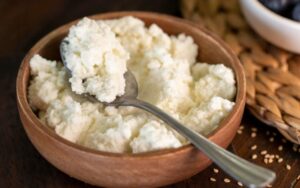
Described as the “lovechild between cream cheese and salty French butter,” Kajmak is perhaps the most distinctive and essential element in the local food landscape. This creamy dairy product is made by simmering unpasteurized milk and then collecting the thin layer of cream that rises to the top. Depending on how long it is aged, Kajmak can range from “young” (mladi), which is mild and sweet, to “aged” (stari), which is sharper, saltier, and firmer.
Ways to Enjoy Kajmak:
- As a Spread: Perfect on fresh, warm homemade bread or lepinja.
- With Grilled Meat: Often served melting over hot pljeskavica or alongside ćevapi.
- Regional Varieties: Famous versions come from the Čačak and Kraljevo regions.
- Traditional Aging: Often matured in wooden vessels called čabrica.
- Hospitality Symbol: A table set with fresh kajmak signals a warm welcome to guests.
#5 Ćevapi
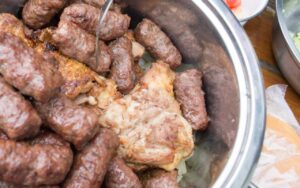
No exploration of this cuisine would be complete without tasting Ćevapi, the country’s beloved grilled meat specialty. These finger-sized, skinless sausages are more than just a meal; they are a cultural institution. Traditionally made from a blend of ground beef, and sometimes lamb or pork, the secret to great Ćevapi lies in the seasoning—usually just salt, pepper, and a touch of garlic—and the quality of the meat. They are grilled over glowing charcoal, which imparts a deep, smoky flavor.
Ćevapi Essentials:
- Meat Blend: High-quality ground beef, often mixed with a bit of lamb for flavor.
- Traditional Serving: Typically served as a portion of 5 or 10 pieces inside a lepinja.
- Classic Garnish: Always accompanied by finely chopped raw onions.
- Where to Eat: Look for specialized “ćevabdžinice” in Belgrade for the most authentic taste.
- Condiments: Pairs perfectly with a side of kajmak or ajvar.
#6 Pljeskavica
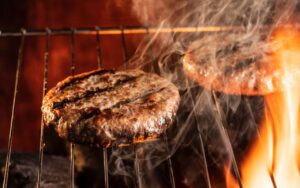
Reigning as the national specialty, Pljeskavica represents the ultimate expression of the local grilling traditional style. Often referred to as the “Balkan burger,” it is a large, spiced meat patty that is much wider and thinner than a typical American hamburger. The meat is usually a mixture of beef and pork, seasoned with onions, garlic, and paprika to give it a savory, slightly spicy kick.
Pljeskavica Varieties:
- Leskovačka Pljeskavica: Famous for being very spicy and containing extra onions.
- Šar Pljeskavica: A version stuffed with melted cheese.
- Gurmanska (Gourmet): Stuffed with cheese, onions, and pieces of smoked meat.
- Hajdučka: Often mixed with smoked meat or bacon for a richer flavor.
- Serving Style: Best enjoyed inside a fresh lepinja with ajvar and urnebes salad.
#7 Sarma
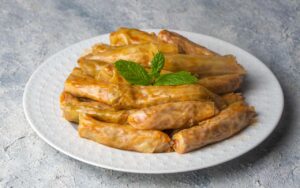
Revered throughout the Balkans, this dish represents the crown jewel of winter gastronomy and is a cornerstone of traditional Serbian cuisine. Sarma consists of a flavorful mixture of seasoned ground meat, rice, and onions, which is carefully wrapped in the leaves of fermented cabbage, known as “kiseli kupus” (sauerkraut). These rolls are then packed into a large pot along with smoked meat—such as ribs, bacon, or ham hocks—and slow-cooked for several hours.
Sarma Facts:
- Kiseli Kupus: The use of fermented cabbage leaves is what makes the Balkan version unique.
- Slow Cooking: Often cooked for 3-4 hours to allow the flavors to fully meld.
- The “Queen of Winter”: A mandatory food for Christmas, New Year, and family slavas.
- Flavor Tip: Many believe it tastes even better when reheated the following day.
- Meat Mix: Typically a combination of ground beef and pork for the perfect texture.
#8 Gulaš
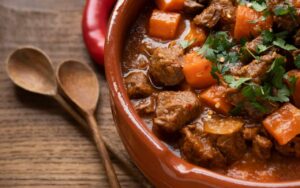
Tracing its roots to Central Europe, Gulaš offers a fascinating glimpse into the hearty comfort foods that dominate the northern regions of the country. While it shares a name with the famous Hungarian dish, the local version has its own unique character, typically being thicker and more meat-focused. It is a slow-cooked stew made from cubes of beef or lamb, simmered for hours with a massive amount of onions until they practically dissolve into a rich, velvety sauce.
Gulaš Highlights:
- Rich Sauce: Created by the slow caramelization of onions and high-quality paprika.
- Meat Tenderness: Hours of simmering make the beef fork-tender.
- Common Sides: Traditionally served over mashed potatoes or with fresh bread.
- Comfort Food: A staple for Sunday lunches and chilly autumn days.
- Traditional Kettle: Often prepared in a “bogrács” (kettle) over an open fire for a smoky aroma.
#9 Ajvar
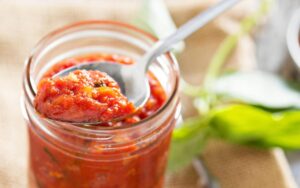
Celebrated as the “caviar of the Balkans,” Ajvar is undoubtedly one of the most versatile and beloved condiments in Serbian dishes. This smoky relish is primarily made from red bell peppers that are roasted over an open flame, peeled, and then slowly simmered with oil and a touch of vinegar. The result is a bright orange spread with a complex, salty-sweet flavor profile that is a must-try food.
Ajvar Features:
- Roasted Peppers: The deep smoky flavor comes from roasting peppers on wood stoves.
- Versatility: Used as a spread, a side dish for grilled meat, or even a dip.
- Zimnica Tradition: Families gather in autumn to prepare jars for the entire winter.
- Varieties: Ranges from “blagi” (mild) to “ljuti” (hot/spicy).
- Learn More: Check out our detailed Ajvar Guide for recipes.
#10 Potato Kačamak
Originating from the rugged mountainous regions, Potato Kačamak is a hearty cornerstone of traditional dishes that has sustained generations. This dish is a variation of the classic cornmeal porridge, but with the addition of boiled and mashed potatoes. The preparation is a physical task; the mixture must be “beaten” or pounded with a heavy wooden stick until it is perfectly smooth and elastic.
Kačamak Highlights:
- Hearty Ingredients: A mix of cornmeal, mashed potatoes, and water.
- Toppings: Traditionally served with melted kajmak and crumbled white cheese.
- Mountain Heritage: Famous in the Zlatibor, Kolasin, and Durmitor regions.
- High Energy: Historically a meal for mountain dwellers performing hard labor.
- Unique Texture: Much denser and creamier than regular polenta or porridge.
#11 Karadjordjeva

Named after a revolutionary leader, this dish is a relatively modern but iconic addition to Serbian cuisine. The specialty consists of a rolled veal or pork steak that is stuffed with a generous amount of creamy kajmak, then breaded and deep-fried until golden and crispy. When cut open, the melted kajmak oozes out, creating a rich and decadent sauce for the tender meat.
Karađorđeva Facts:
- Chef Mića Stojanović: Created in 1956 as a creative improvisation.
- “The Girls’ Dream”: A humorous local nickname for this large, cylindrical meat dish.
- Garnish: Traditionally served with tartar sauce, a lemon slice, and roasted potatoes.
- Meat Choice: Can be made with veal, pork, or even chicken steak.
- Sophisticated Flavor: Blends traditional ingredients with European culinary techniques.
#12 Rakija

Regarded as the “liquid soul” of the nation, Rakija holds an unmatched position among local drinks. This potent fruit brandy is a symbol of hospitality, pride, and traditional craftsmanship. It is distilled from various fruits, but the most famous variety is Šljivovica, made from plums.
Rakija Culture:
- Variety of Fruits: Plums (Šljivovica), Quince (Dunjevača), Apricot (Kajsijevača), Pear (Vilijamovka).
- Čokanjčići: The small, traditional glasses used for serving.
- Aperitif: Traditionally enjoyed before a meal with a meze platter of cheese and meat.
- Homemade Pride: Almost every rural household produces its own high-quality version.
- Aging: Premium varieties are aged in oak barrels to develop a golden color and smooth taste.
#13 Prebranac
No guide to traditional food is complete without Prebranac. This hearty dish consists of large white beans slow-baked with plenty of onions and paprika until they reach a creamy, caramelized consistency.
Why You Must Try Prebranac:
- Simple Ingredients: Beans, onions, oil, and paprika—transformed by slow-baking.
- The Vessel: Traditionally baked in earthen pots for the best flavor.
- Versatile Meal: Served as a side to grilled meat or as a substantial main course.
- Winter Staple: A core part of the winter and holiday “posna” (fasting) menu.
- Depth of Flavor: The slow-cooking process caramelizes the onions into a rich sauce.
#14 Urnebes
If you enjoy a bit of heat, Urnebes is a must-try. This “orderly mess” is a spicy spread made from aged cheese, hot chili peppers, and garlic. It is one of the most popular side dishes or salads served with grilled meat in Belgrade.
Urnebes Features:
- Spicy Kick: Made with hot chili peppers or ground dry peppers.
- Cheese Base: Uses salty, aged white cheese for a sharp flavor.
- Perfect Pairing: The ideal condiment for pljeskavica and ćevapi.
- Southern Roots: Originally from the city of Niš and southern Serbia.
- Color: A vibrant orange-red paste that adds excitement to any plate.
#15 Vanilice
To finish on a sweet note, you must try Vanilice. These traditional walnut and vanilla cookies are sandwiched together with apricot jam and coated in powdered sugar. They were recently voted the best holiday cookies in the world by various food portals.
Vanilice Highlights:
- Melt-in-your-mouth: A rich dough made with flour, sugar, and lard or butter.
- Classic Filling: Traditionally uses apricot or raspberry jam.
- Holiday Staple: A mandatory treat for Christmas and New Year celebrations.
- Bite-sized: Petite, elegant cookies that represent the “sweet side” of the cuisine.
- Nutty Flavor: Ground walnuts give the dough a unique, rich taste.
Exploring the Belgrade Food Scene
If you are visiting Serbia, the capital city is undoubtedly your ultimate culinary playground. Belgrade offers a vibrant and diverse food scene that ranges from traditional 19th-century kafanas in the bohemian Skadarlija district to ultra-modern restaurants serving avant-garde fusion cuisine. When searching for the best Serbian dishes, look for establishments that emphasize seasonal, local ingredients and stick to traditional slow-cooking methods.
Learn more about Chef Zivko’s Belgrade roots and how his upbringing in this vibrant culinary capital continues to inspire the authentic Balkan flavors he brings to the private dining scene in New York.